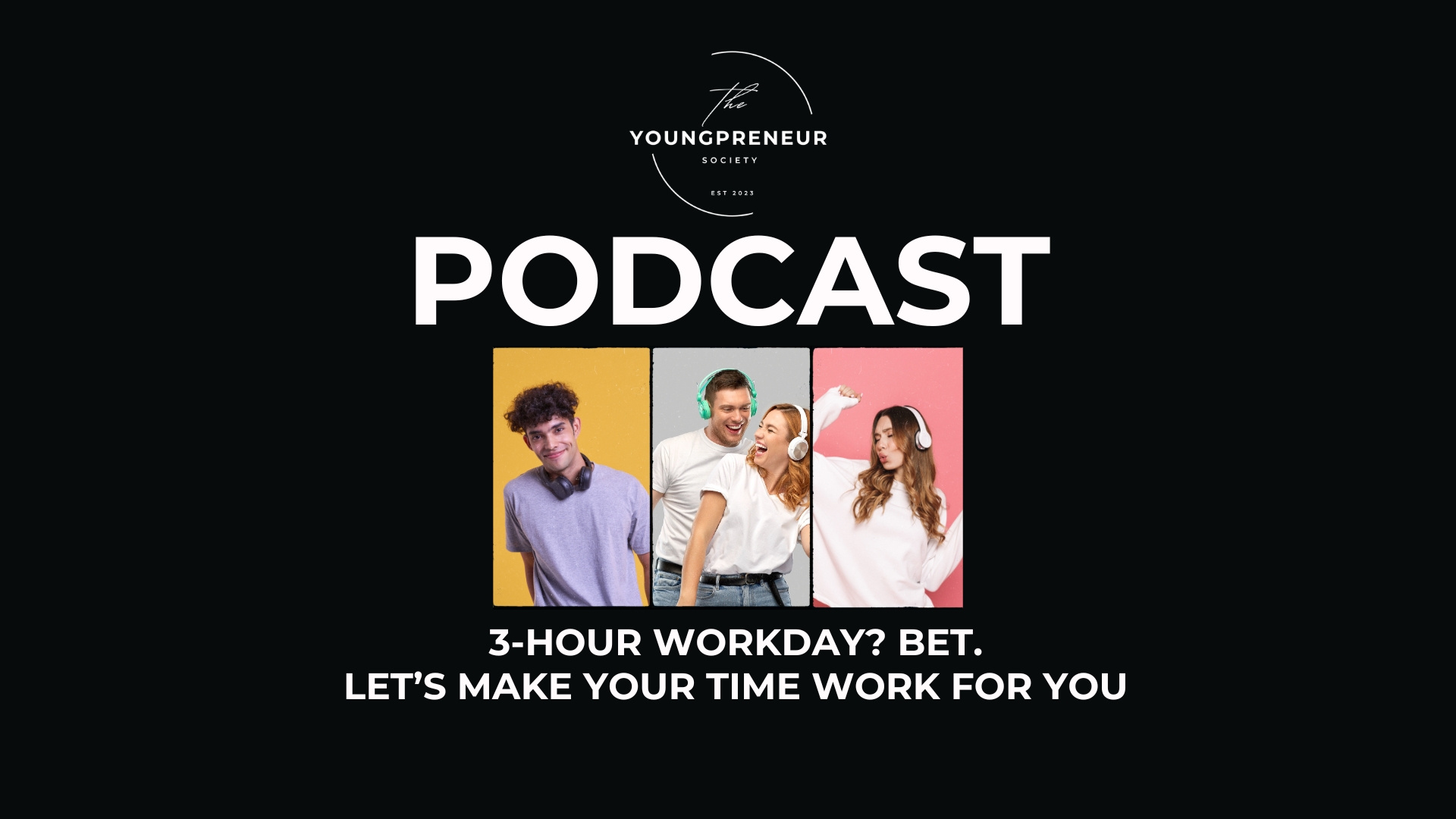
Somewhere along the line, entrepreneurship got romanticised into a “5:00 AM grind” where you sleep for four hours and work for twelve. If you aren’t exhausted, people act like you aren’t serious.
I don’t buy that, especially for young entrepreneurs balancing school, jobs, or family life. You don’t need more hours; you need more focus per hour. In this episode, I’m breaking down how to get more done in three to five focused hours than most people do in twelve distracted ones.
The One Thing Rule
The biggest mistake young founders make is trying to move everything forward at once: the website, the podcast, the logo, and the ads all at the same time. That is just scattered energy.
- Identify the needle-mover: Every day, ask yourself: “If I could accomplish one thing today that makes everything else easier, what would it be?”
- Prioritise the “Getting it Done” tasks: If you don’t have clients, your one thing is outreach. If you don’t have an offer, your one thing is building it.
- Ignore the “Busy Work”: Tweaking your bio and reorganising your planner might feel productive, but they aren’t moving your business forward.
- Win early: Complete that one thing early in the day so you have momentum, even if the rest of the day falls apart.
Protect Your Focus: Power Hours & No-Scroll Mornings
To make a shorter workday possible, you have to protect your brain from distractions.
- The Power Hour: Spend 60 minutes with your phone on aeroplane mode and notifications off. Pick one task and don’t switch. You’d be shocked at how much you can do in one uninterrupted hour.
- The No-Scroll Morning: Don’t touch social media before your workout, your reading, or your first Power Hour. Scrolling puts you in “reaction mode”, where you start your day consuming instead of creating.
- Scrolling is not building: Especially for us, social media can feel like work, but consuming content isn’t the same as creating it. Build first, consume later.
Intentional Time Blocking
To-do lists are infinite, but time blocks are intentional. If a task is vague, it probably won’t happen.
- Be specific: Instead of a general “work on content” note, block out “9:00 AM to 10:00 AM: Content Creation”.
- Schedule the “Optional”: If it isn’t on the schedule, it feels optional, and optional things rarely get done.
- Prioritise energy: The real secret is managing your energy rather than just your time.
What I’ve Learnt About Productivity
Entrepreneurship shouldn’t be a 12-hour grind that leads to burnout. By using these systems, you can create a structure where progress is easier and your time actually works for you. It’s about being smart with the moments you have, so you can build a business that fits your life.
My Challenge to You
This week, try the One Thing Rule. Before you start your day, identify the single most important task that will move your business forward and do it first. Don’t let yourself get distracted by the “small” tasks until that one big win is checked off.
Enjoyed this episode? If this episode helped you rethink your workday, share it with another young entrepreneur who’s ready to work smarter, not harder.
Highlights
- 00:00 Hustle Myth Busted
- 00:50 Focus Over Hours
- 01:05 One Thing Rule
- 02:08 Power Hour Sprint
- 02:27 No Scroll Morning
- 03:08 Time Blocking System
- 03:34 Wrap Up